
Being an insurance product, the questions that a customer has to answer to get a quote were very detailed and were confusing at times. Within journeys like this, finding the sweet spot between too much information and too little is key, as a user's cognitive load can become overloaded very easily.
The existing quote journey took the approach of trying to ask every detail upfront before giving a final price, even if those details didn't affect the price. It was clear that users were becoming overwhelmed, as the funnel progression showed high drop-offs on the question heavy steps, and customer agents reported customers struggling with these steps. In addition to the questions, customers were asked to agree to lengthy legal declarations, sometimes with 15+ bullet points.
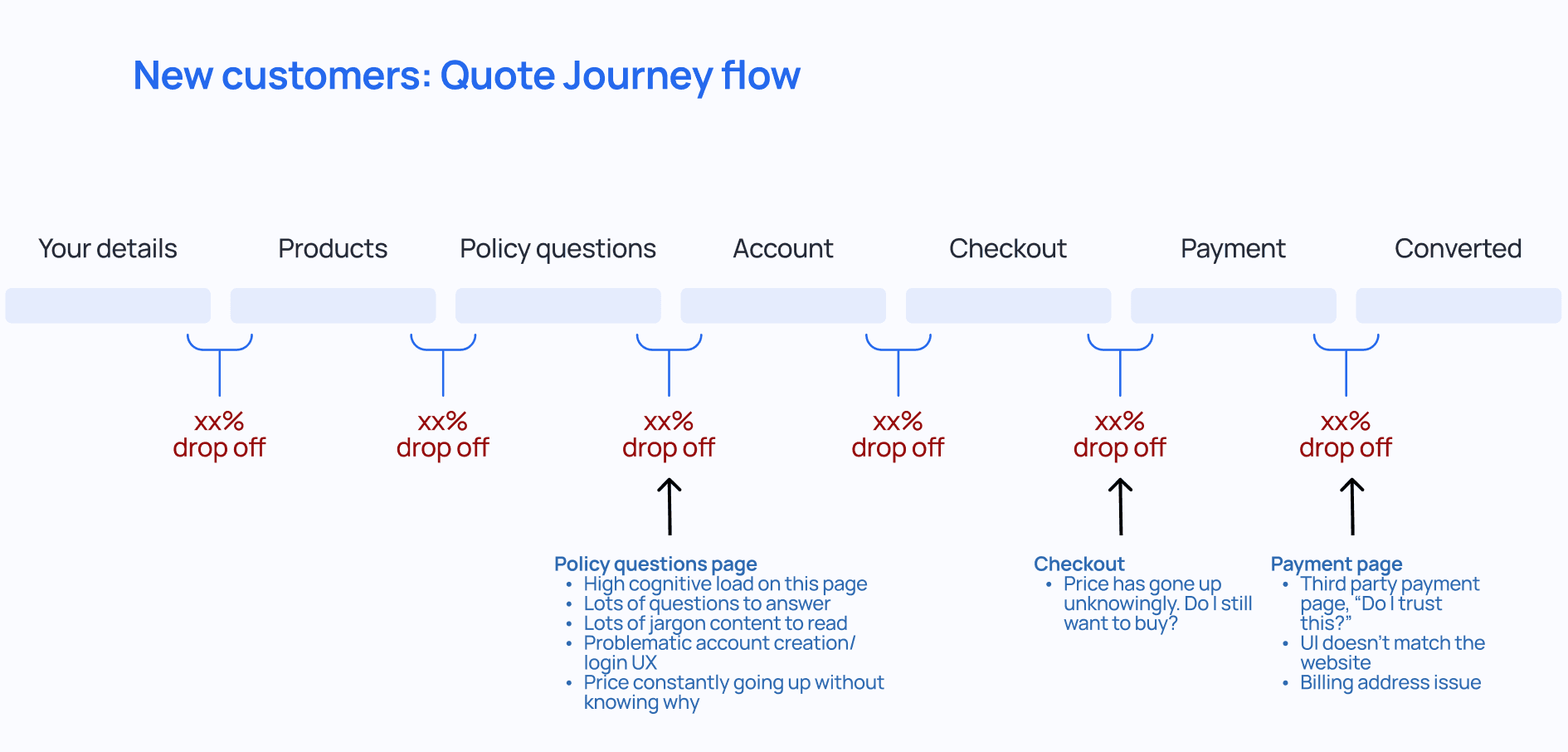
Drop off percentages not shown to protect the client's funnel data.
The solution was to split the journey into sections:
User login up front (previously half way through the journey)
Policy questions (these affect the price)
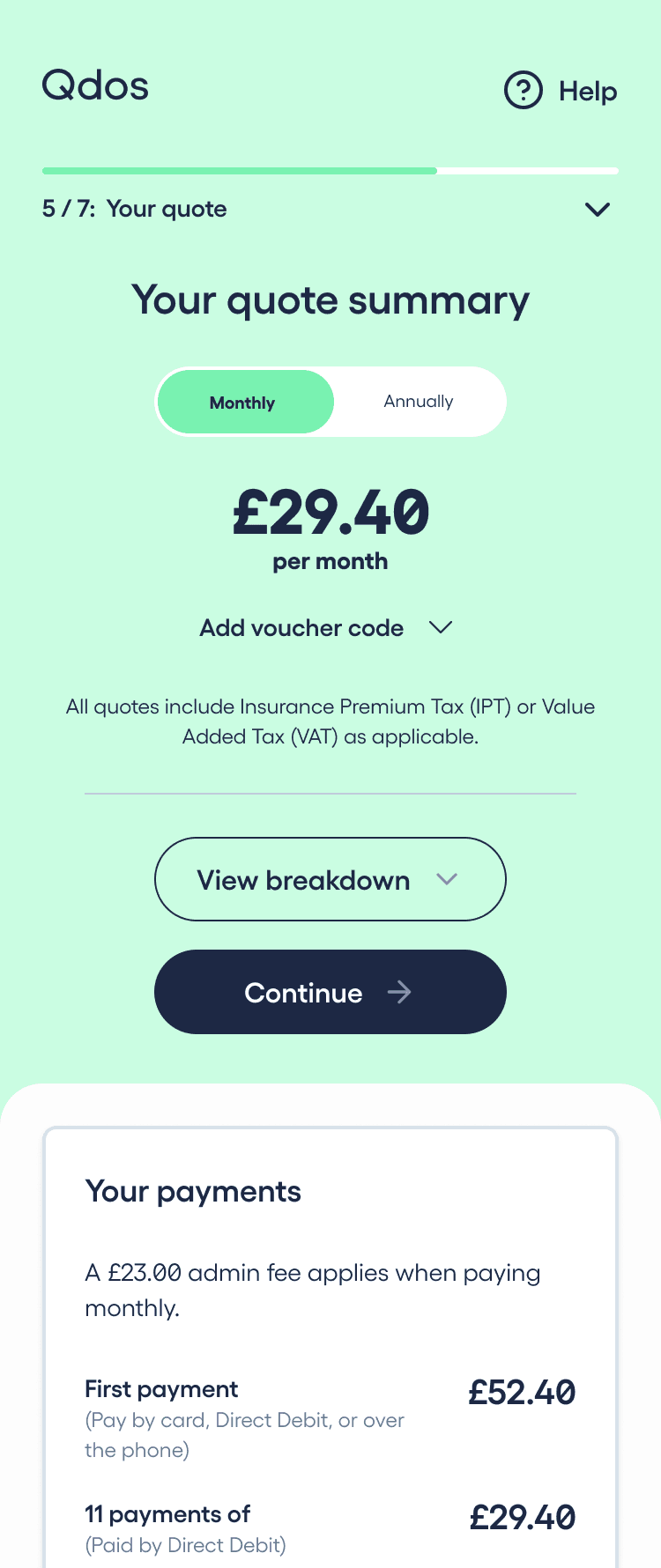
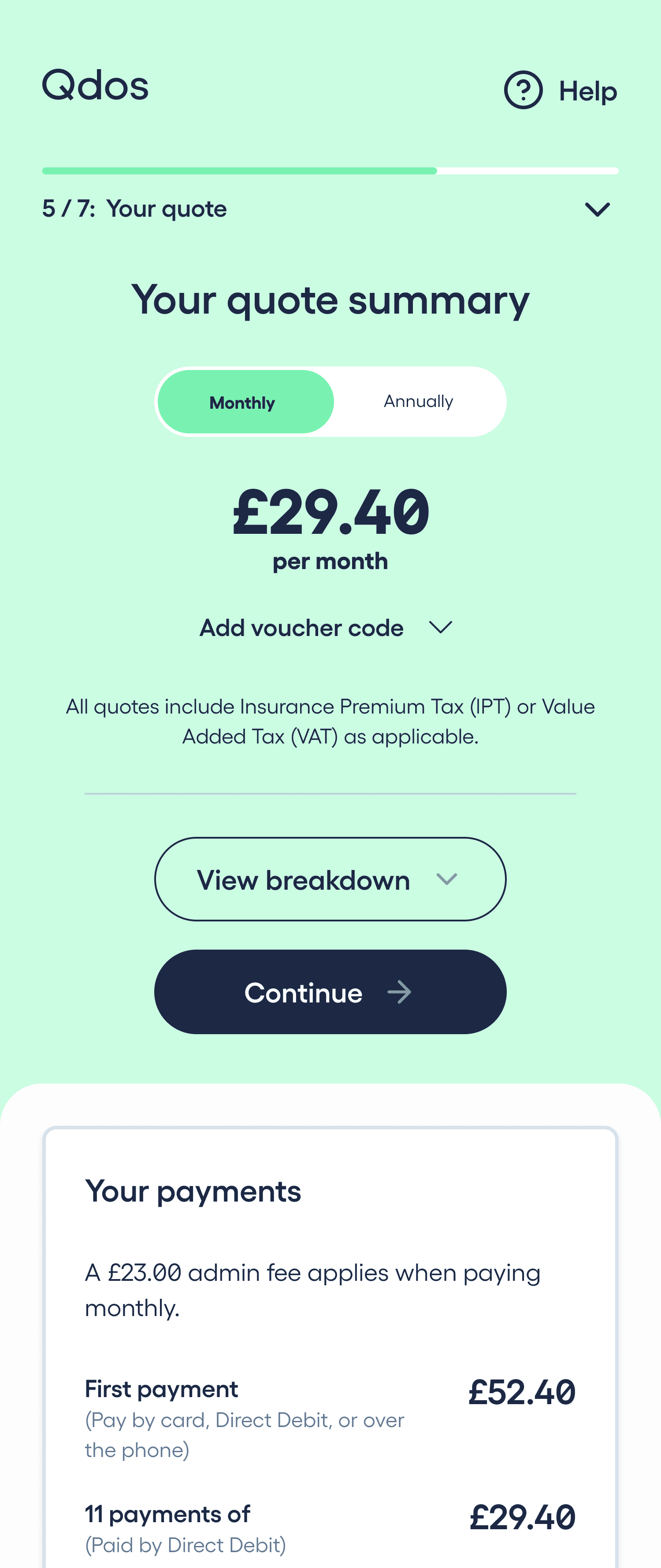
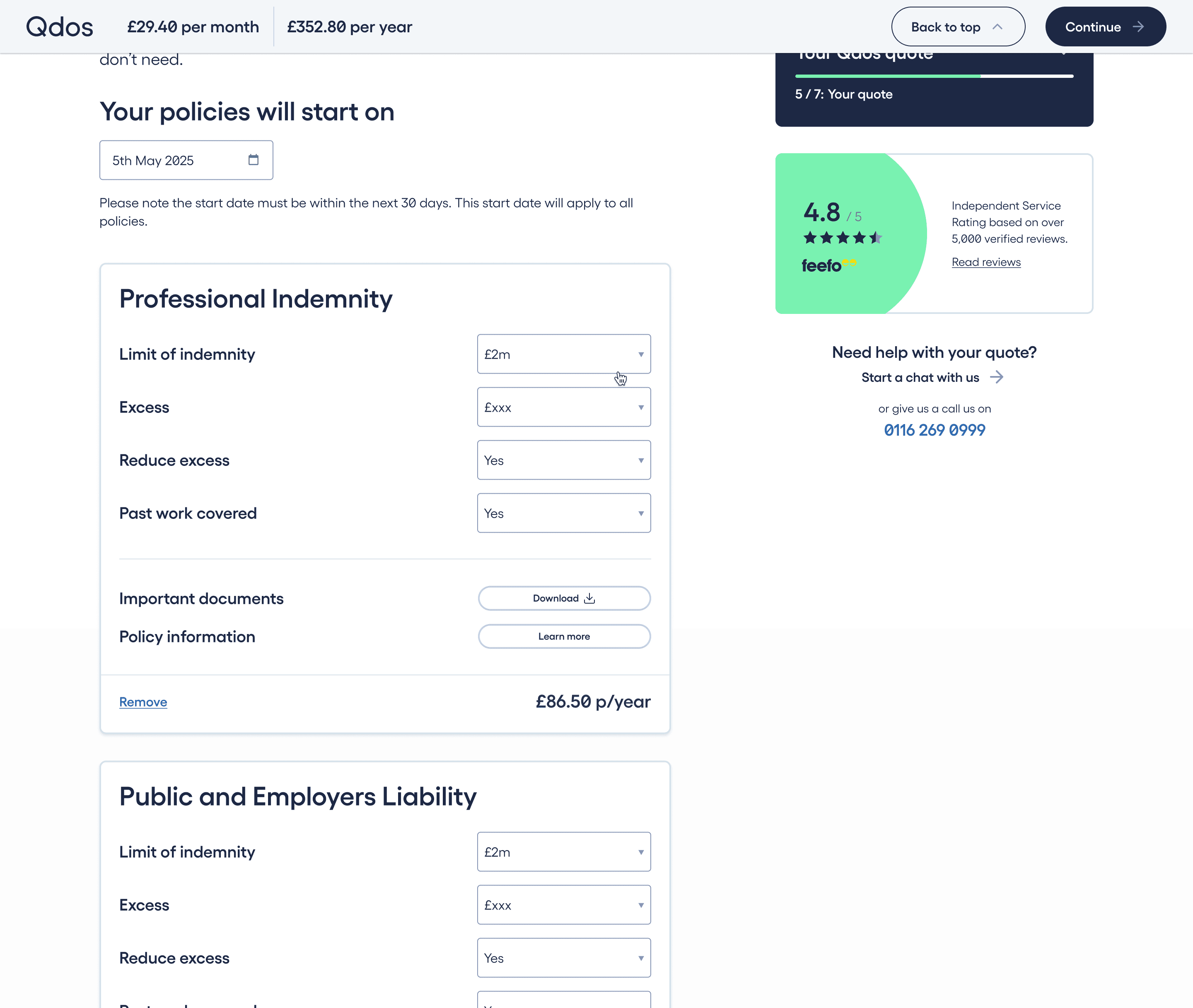
Quote summary - a new page that summarises the price and policy details
Information gathering questions
Checkout
This new journey would only ask the questions that affected the price upfront, reducing the time taken and cognitive load on the user to obtain a quote.
After obtaining a summary of their quote on the new quote summary page, a customer would be able to tweak certain aspects of their policy and see their price change in real-time. This would solve issues of a user having to go back-and-fourth in the journey to tweak parts of their policy to see how it would change the price, and give an anchor for saved quotes to return to.
After continuing, this is when the further information gathering and declarations would be presented so that a customer could purchase and activate their policy.
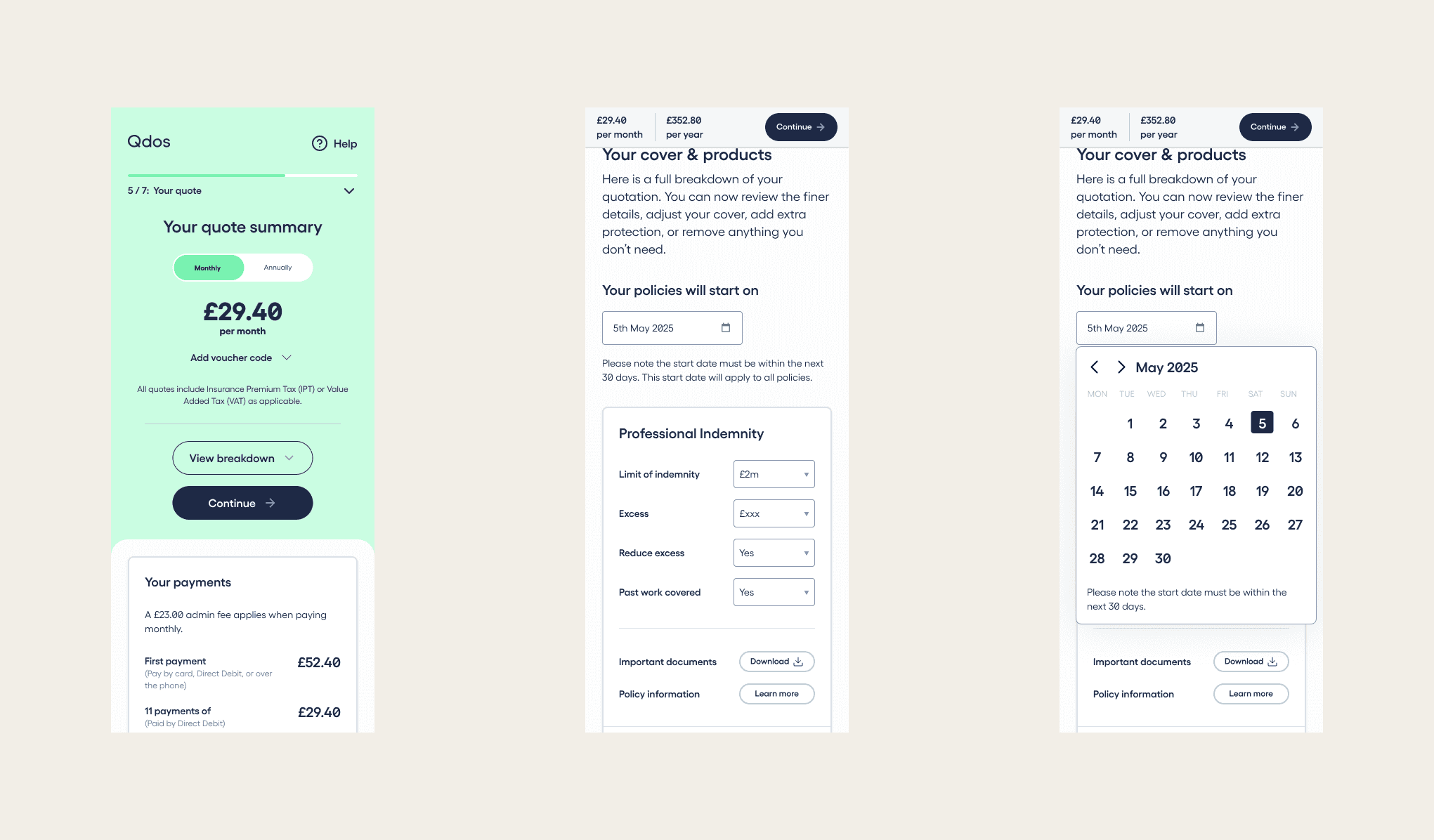
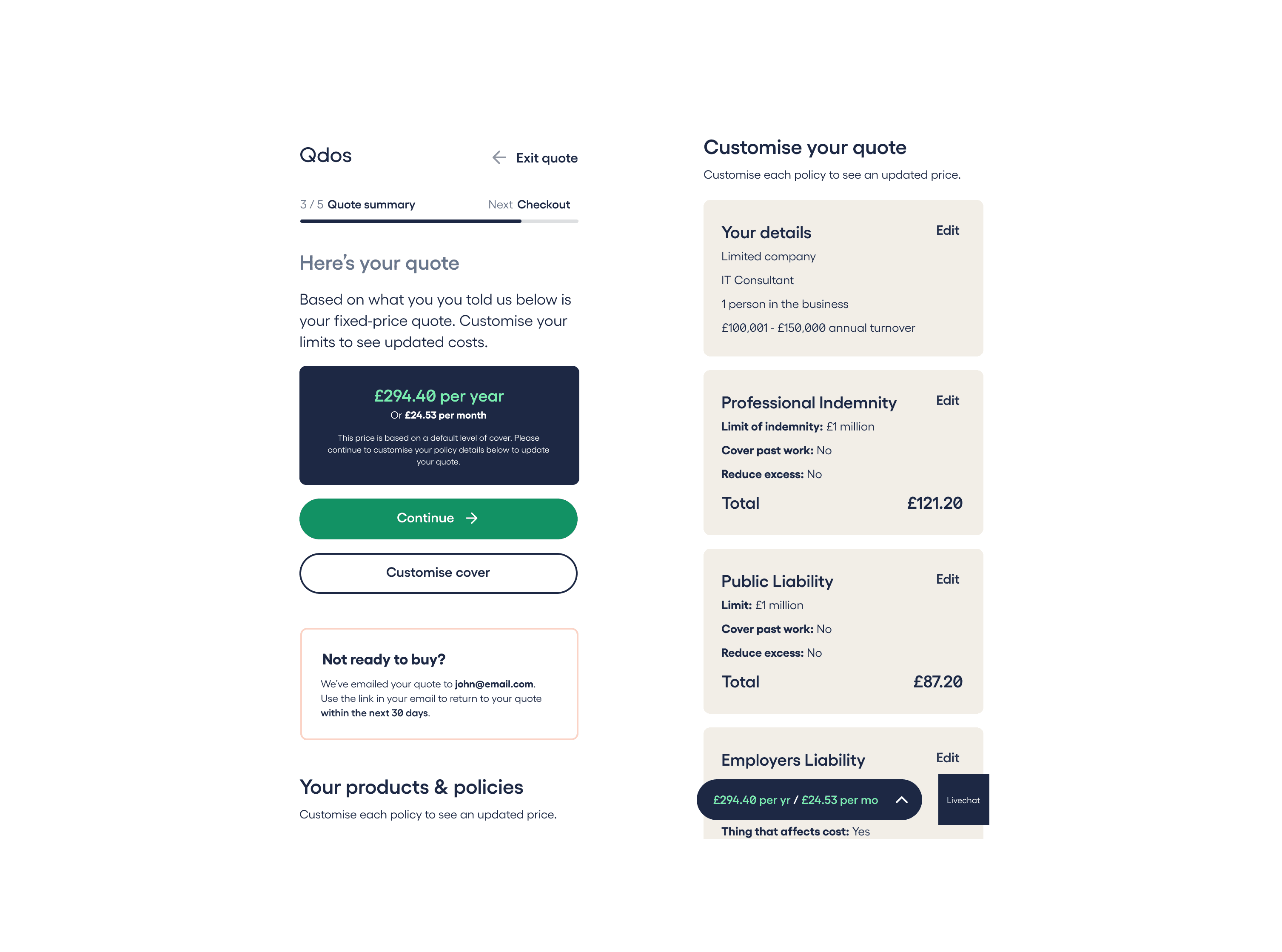
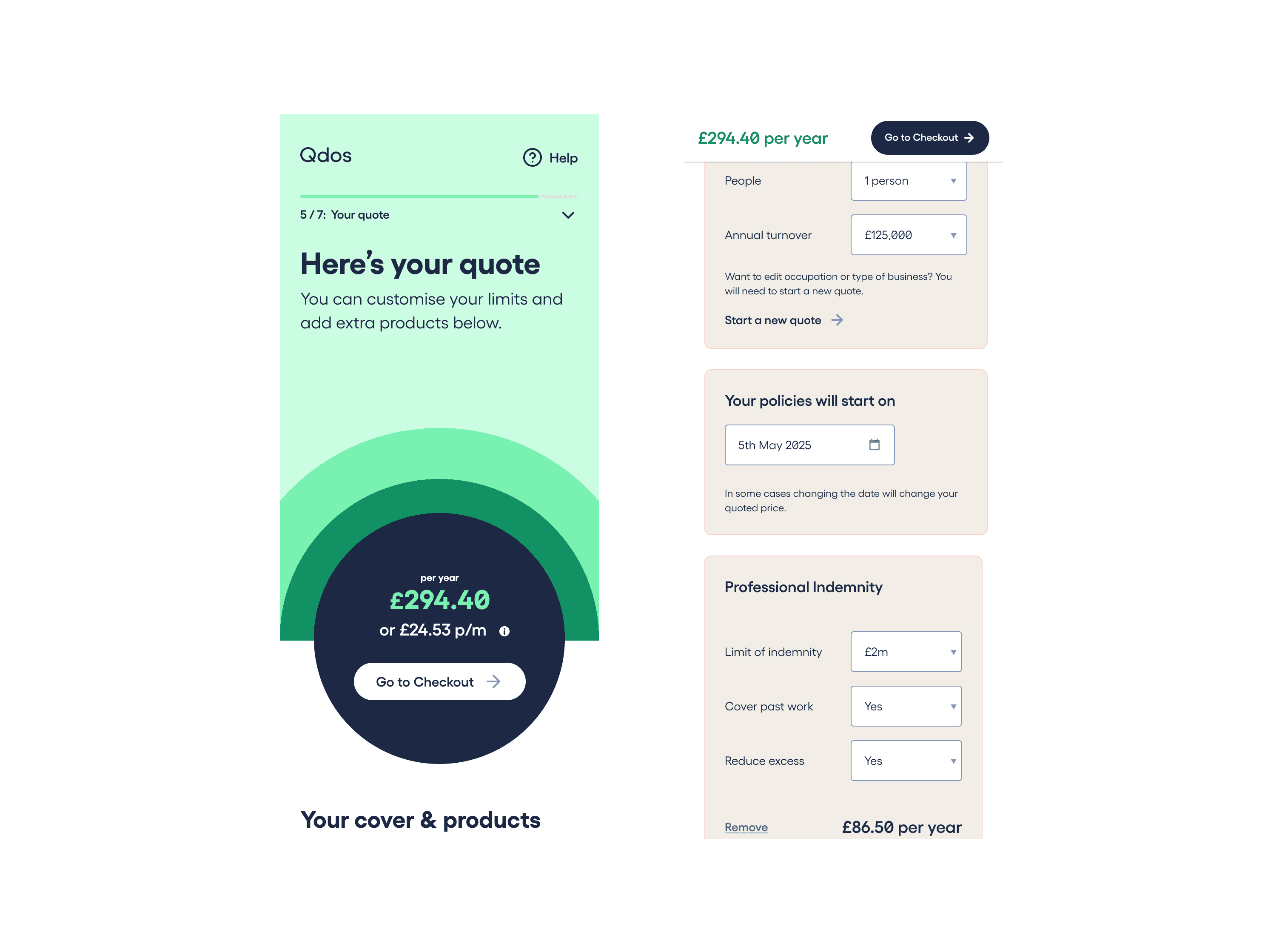
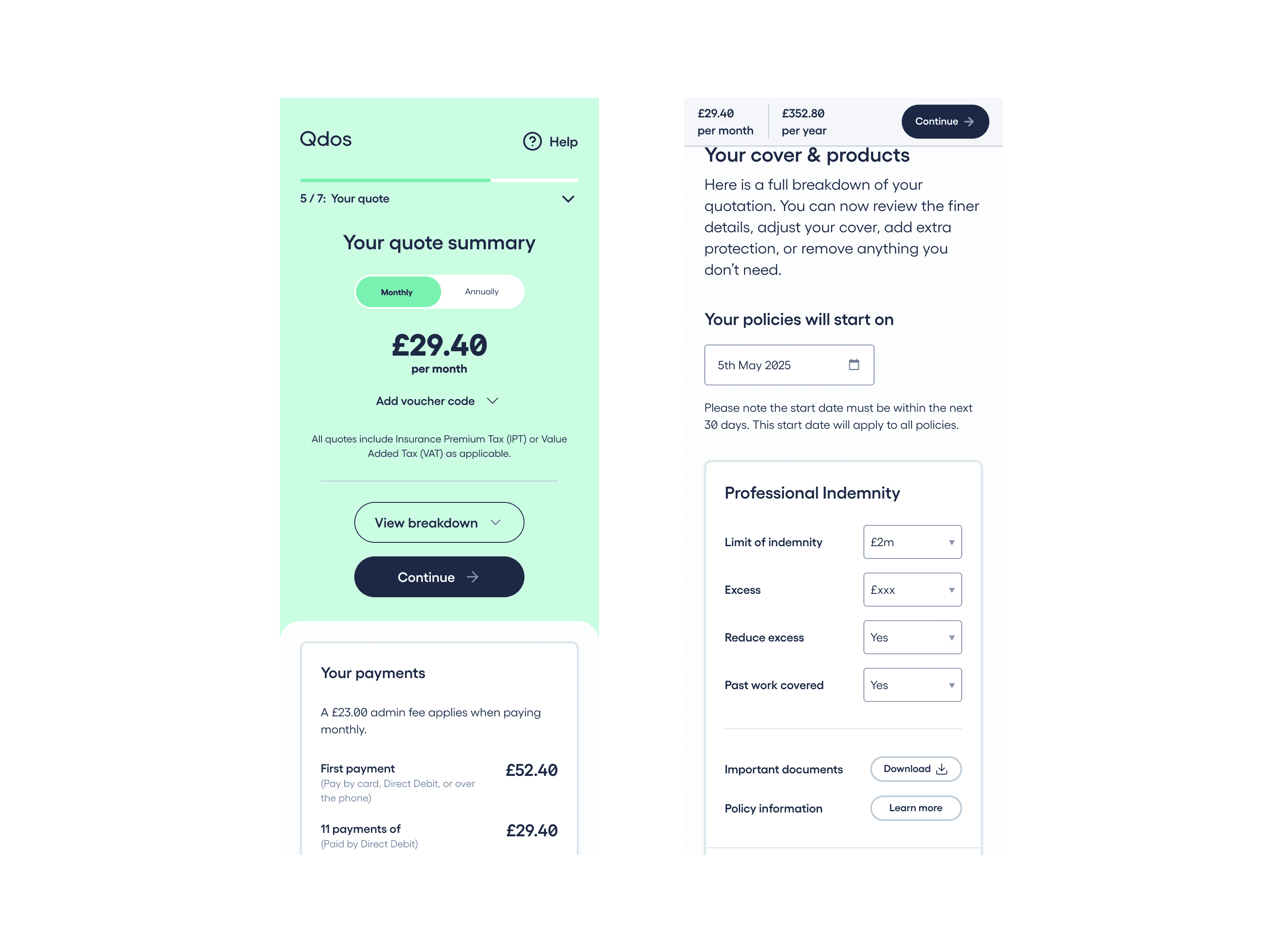
Across the entire quote funnel my designs considered all the UX issues I had uncovered in my UX review, analytics review, and stakeholder insights, as well business requirements.
Some examples of these include:
Customer login was at a mid-way through the journey, however by moving to the beginning we could auto-populate a customer's details and merely ask them to confirm, saving time.
The customer was overloaded with all questions up front. I split these up those only the questions that change the price were included up front, and then once a customer was happy with the price, the information gathering questions were presented.
Ability to save their quote and come back to it later
Improving contextual help by adding in clear "Why we're asking this" inline links
Better messaging when there are linked products added to the quote when bundled products were added
Not showing 15+ bullet point legal declarations up front, with a user able to open these in a modal and then agree to them, saving vital page space, and reducing cognitive load
Up-selling consultancy products at the right moment
Redesigning the payment page to give more trust in the brand (currently it was a third-party payment portal).
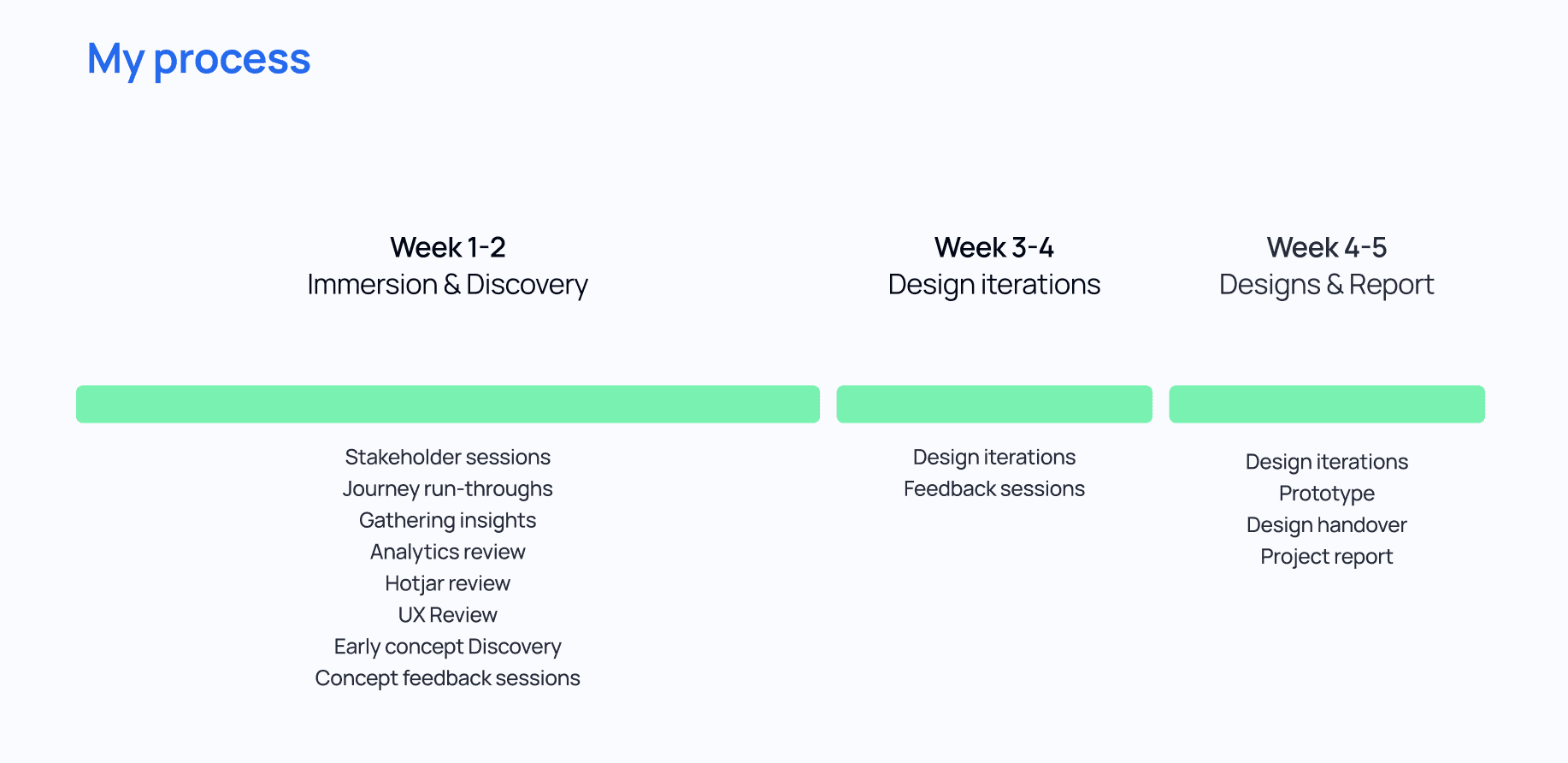
This is a short case study as the journey is still in development, so I will not divulge too much information. I can walk you through the designs and decisions taken at each stage during an interview.
The impact of my work cannot be measured quantitively as my recommendations were not implemented during the engagement. However I received very positive feedback from Qdos, and the team have gained:
A new quote funnel design that is developer handoff ready
Training on interpreting their digital analytics tools
A recommendations report with:
UX Review findings - a detailed log of the issues and how to improve them
Analytics review findings - funnel progression insights, main drop-off points, and how to improve reporting
Impact projections for improvements - where to focus to make the most impact
The new quote funnel is currently in development as of early 2026.